
Transparency in AI is not just a legal requirement, it is a fundamental principle that fosters trust, accountability, and responsible innovation. The Open Ethics Transparency Disclosure is a valuable tool which helps you enhance transparency in AI systems, supporting compliance with global AI regulations.
The escalating risks of mass biometric surveillance in the age of AI | Part 1
What’s worse than being constantly watched? Not knowing you’re being watched, or that your unique physical and biological information is being fed into a vast surveillance infrastructure that you have no control over. From ICE’s use of facial recognition on the streets in the US to Hungary identifying and tracking Pride event attendees, China’s monitoring of ethnic minorities, France normalizing mass surveillance during the Paris Olympics, and the monitoring of political dissenters in Africa, these security systems are rapidly blurring the line between targeted and mass surveillance.
The escalating risks of mass biometric surveillance in the age of AI | Part 2
As artificial intelligence (AI) capabilities scale, the technology amplifies mass surveillance efforts and the resultant impact on democracy, human rights, and our collective agency. What’s more, as government and corporate power converges, the regulatory landscape meant to protect citizens remains spotty and absent altogether in some regions.
Standards and Considerations for Medical Data Disclosure For Open Ethics Transparency Protocol
In the context of understanding, possibly developing, and enhancing an ethical framework for healthcare applications, we face fragmented, evolving standards on medical data disclosure. In light of these significant barriers, we evaluate and discuss a proposed modular integration of legal, ethical, and technical disclosure standards (e.g., HIPAA, GDPR, Xcertia, ISO/IEEE 11073)¹ into transparency, autonomy, and compliance processes across jurisdictions.
Open Ethics x Pirate Night Workshop: The Transparency Circle
In this article, we take a closer look at the Open Ethics x Pirate Night Workshop that revealed why traditional approaches to AI transparency fall short and what actually works.
When machines feel too real: the dangers of anthropomorphizing AI

In this article, we explore the growing trend of human-AI relationships, what AI actually is, the risks of anthropomorphizing it, and how we can navigate this treacherous road humanity is speeding down… safely.
The AI race: Should global dominance trump AI transparency and safety?
As the global race for AI dominance cranks up, what are the potential risks when superpowers like the U.S. prioritize winning over AI transparency and safety? And while ongoing advances in artificial intelligence do benefit society, will unregulated innovation serve our good or speed up humanity’s downfall?
Why is Transparency the Key to AI Compliance under the EU AI Act?

The EU AI Act makes transparency central to compliance, requiring companies to disclose key AI system information. Beyond regulation, transparency builds trust, drives innovation, and creates a competitive advantage. This text highlights why it matters, what to disclose, and how to start adopting transparency measures in your company.
Self Driving Car Ethics: Beyond A Glorified Trolly Problem

The self-driving cars ability to accurately decide on which lives to save and which to sacrifice very much depends on its ability to detect each and every one of those lives to begin with.
Is there a risk of self-driving cars identifying some pedestrians but not others? The short answer is yes, there is. While the famous philosophical dilemma, commonly known as “the trolly problem”, is not completely irrelevant, there are much bigger ethical fish to fry.
Balancing Act: Navigating Safety and Efficiency in Human-in-the-Loop AI
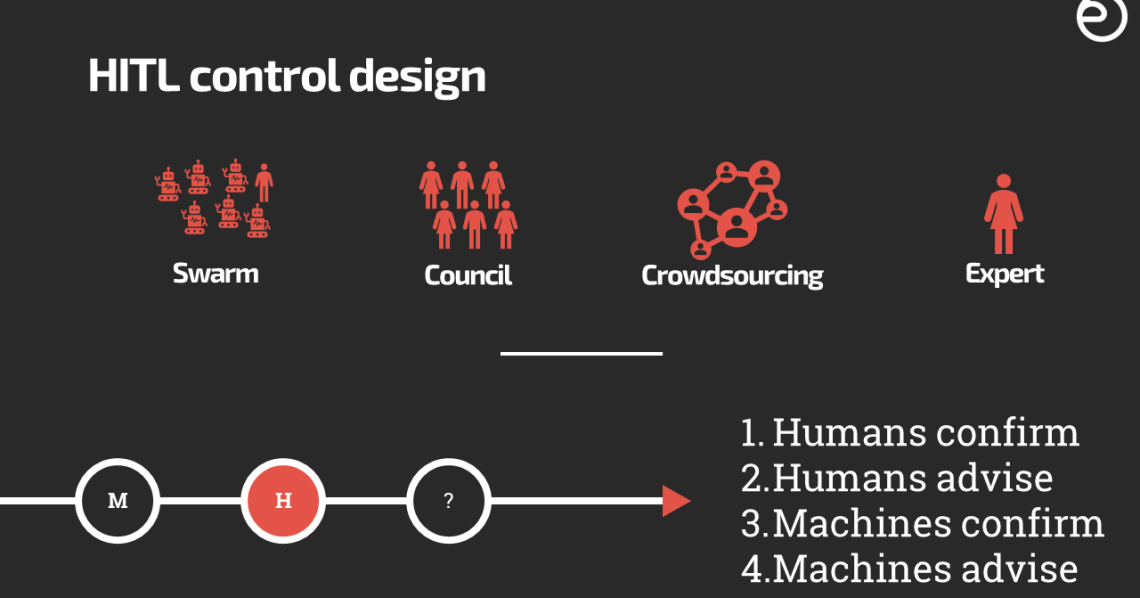
Deploying AI in production brings some challenges and trade-offs between safety and efficiency. Humans are setting up, tuning, testing, and using the AI systems, providing feedback and guidance to the machines.
Read More