Open Ethics Transparency Disclosure Guide
Transparency in AI is not just a legal requirement, it is a fundamental principle that fosters trust, accountability, and responsible innovation. The Open Ethics Transparency Disclosure is a valuable tool which helps you enhance transparency in AI systems, supporting compliance with global AI regulations.
1. What is a Transparency Disclosure?
Disclosure is the process of openly sharing information about a digital product, specifically an AI system, to ensure transparency, trust, and accountability. It involves providing clear, understandable details on how the system works, including its data, algorithms, decision-making processes, and data handling practices.
Balancing Transparency and Confidentiality
It is important to clarify that a Transparency Disclosure is not an open-book exposure of your company’s confidential information, trade secrets, or sensitive data. Instead, it is a carefully balanced approach to transparency, sharing only the necessary information to foster trust and compliance without jeopardizing your competitive advantage. Businesses retain control over what they disclose, ensuring that strategic, proprietary, or sensitive information remains protected while still demonstrating responsible practices.
Why Disclosure Matters for Your Organization
- Builds Trust: Transparency helps customers understand how your AI system works, increasing their confidence in your brand.
- Ensures Compliance: It aligns your business with international regulations like the EU AI Act and GDPR, avoiding potential legal risks.
- Enhances Reputation: Companies that proactively disclose AI practices are seen as leaders in responsible technology.
- Reduces Risks: Clear disclosure minimizes misunderstandings and reduces the chances of disputes or complaints.
Example:
Imagine the label on a packaged food product: it lists ingredients, nutritional values, and allergens to help consumers make informed choices. Similarly, a Transparency Disclosure lists the “ingredients” of an AI system, including its data sources, algorithms, decision-making logic, and data processing methods, providing users with clear insights into how the system works.
2. How to Do It?
Creating a Transparency Disclosure involves a few simple steps:
- Identify Your Product: Choose the digital product or AI system for which you want to create a disclosure.
- Complete the Disclosure Form: Provide information about four key aspects:
- Training Data: Where the data comes from and how it is labeled.
- Source Code: Whether the code is open-source, proprietary, or a mix.
- Decision Space: The types of decisions the AI can make.
- Processing Approaches: How data is processed, stored, and protected.
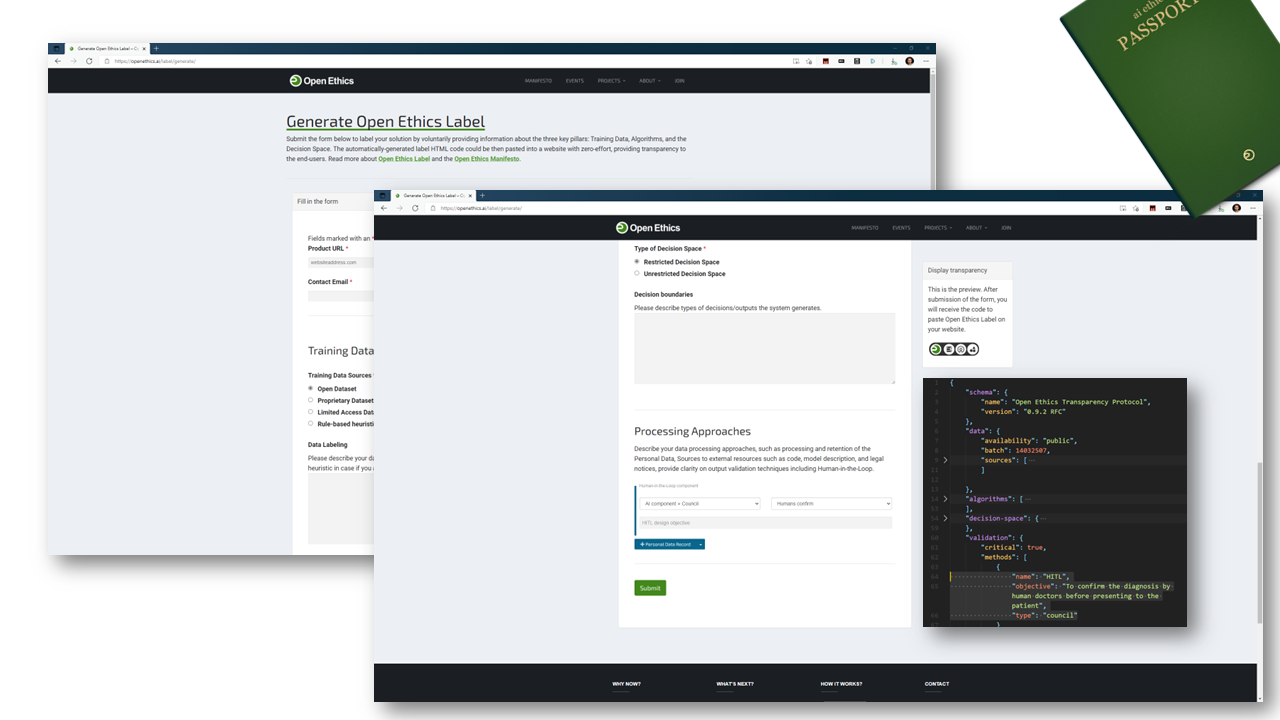
- Generate the Transparency Disclosure: Use the Open Ethics platform to create a JSON file and an HTML code (Open Ethics Label).
- Display the Label: Embed the HTML code on your website for public access.
Example:
A company offering a recommendation engine for e-commerce can disclose:
- Training Data: “We use anonymized purchase data from our users.”
- Source Code: “Partially open-source with proprietary components.”
- Decision Space: “Recommends products based on user preferences.”
- Processing Approaches: “Data is stored securely in our cloud servers.”
3. What Are the Necessary Fields?
To ensure a complete and effective disclosure, include the following fields:
- Product URL: The link to the product page.
- Contact Email: A dedicated email for inquiries about the disclosure.
- Training Data: Data sources, labeling methods, and potential biases.
- Source Code: Description of the code type (open, proprietary).
- Decision Space: Types of decisions the AI can make.
- Processing Approaches: Data processing and storage methods.
4. What is Transparency Manifest?
The Transparency Manifest is the digital record of your disclosure. It is a JSON file containing all the information you provided, signed with a cryptographic hash to ensure authenticity. It serves as a verifiable record of your commitment to transparency.
Example:
If you choose to disclose that your AI uses only public datasets, this information will be included in the Transparency Manifest file (transparency.json).
5. What is Open Ethics Label?
The Open Ethics Label is a visual and machine-readable representation of your Transparency Disclosure. It consists of:
- A JSON file (transparency.json) with all disclosure details.
- An HTML code snippet that displays the label on your website.
Example:
Imagine a user visiting your website and immediately noticing the Open Ethics Label. Curious, they click on it and are instantly provided with clear, structured information about your AI system: where the data comes from, how decisions are made, and how their data is handled. This transparency not only builds trust but also sets your company apart, showing that you prioritize ethical practices and compliance. Customers feel safer, and regulators see your commitment to responsible technology.
6. How to Use It?
- Generate Your Label: Complete the Transparency Disclosure on the Open Ethics platform.
- Receive the JSON and HTML Code: These are automatically generated for you.
- Embed the HTML Code: Place the code on your website to publicly display the label.
- Keep Your Disclosure Updated: Regularly review and update the disclosure to reflect changes in your AI system.
Why Transparency Disclosure Matters:
- Builds Trust: Transparency helps customers understand how your AI works, increasing their confidence in your brand.
- Ensures Regulatory Compliance: Demonstrates proactive alignment with international regulations such as the EU AI Act and GDPR, minimizing the risk of fines or sanctions.
- Strengthens Market Position: Companies that disclose AI practices responsibly are seen as ethical leaders and gain a competitive advantage.
- Reinforces Accountability: Clearly defines your ethical approach to AI, which can be independently verified.
- Reduces Legal Risks: Minimizes misunderstandings and disputes by providing clear, accurate information to users and regulators.
Fill out your first Transparency Disclosure & generate the Open Ethics Label here. See the complete how-to guide.
Featured Photo Credits: @Canva