
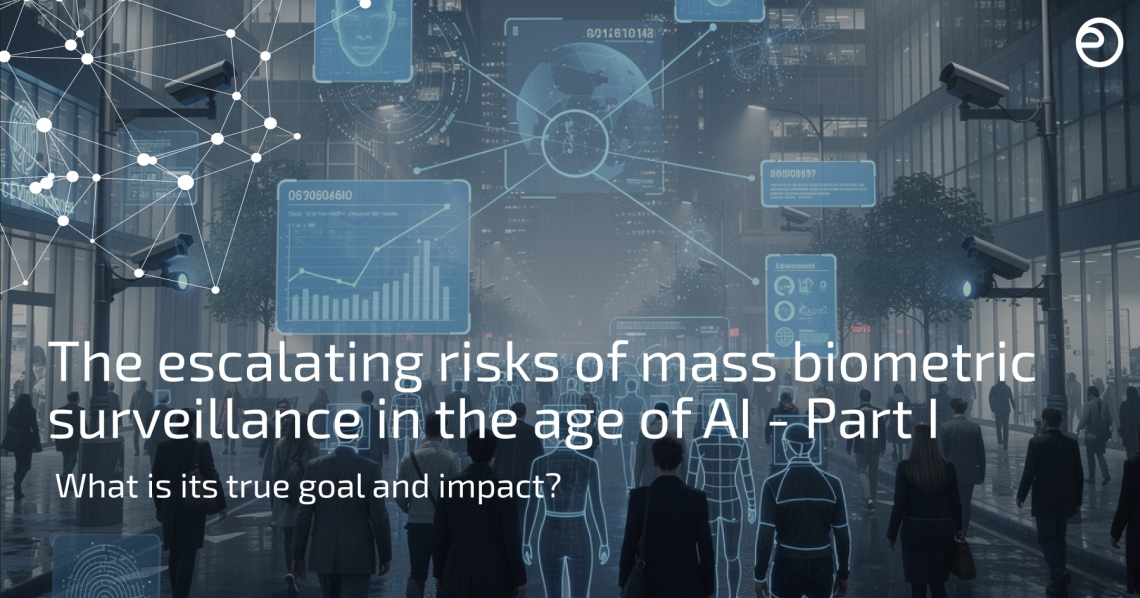
What’s worse than being constantly watched? Not knowing you’re being watched, or that your unique physical and biological information is being fed into a vast surveillance infrastructure that you have no control over. From ICE’s use of facial recognition on the streets in the US to Hungary identifying and tracking Pride event attendees, China’s monitoring of ethnic minorities, France normalizing mass surveillance during the Paris Olympics, and the monitoring of political dissenters in Africa, these security systems are rapidly blurring the line between targeted and mass surveillance.
The escalating risks of mass biometric surveillance in the age of AI | Part 2
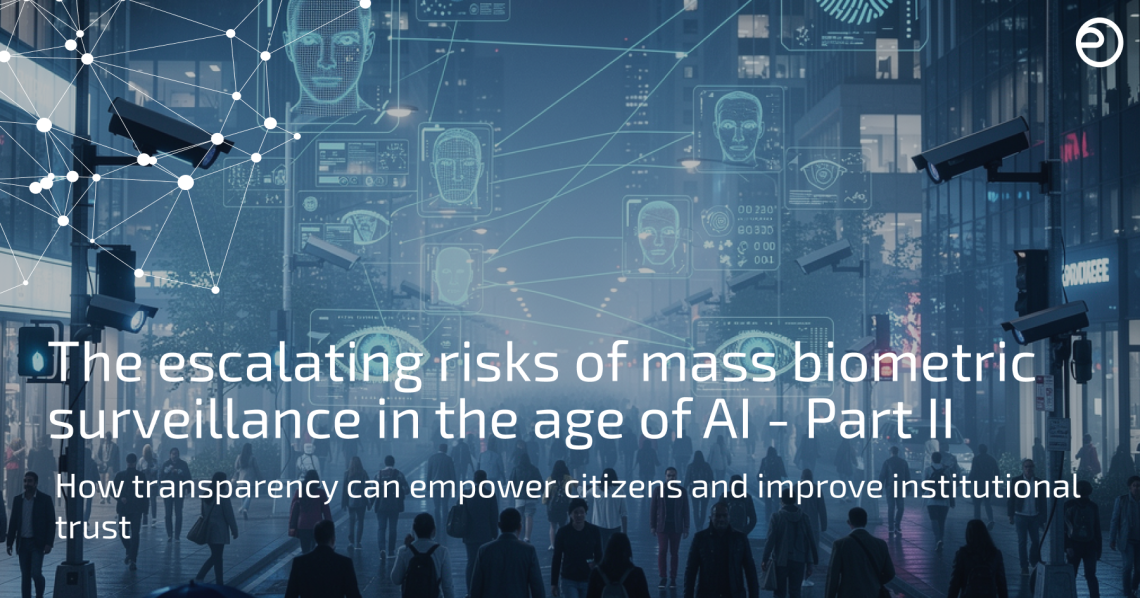
As artificial intelligence (AI) capabilities scale, the technology amplifies mass surveillance efforts and the resultant impact on democracy, human rights, and our collective agency. What’s more, as government and corporate power converges, the regulatory landscape meant to protect citizens remains spotty and absent altogether in some regions.
Biometric Surveillance in Public Spaces – The Humpty-Dumpty of Privacy & Safety
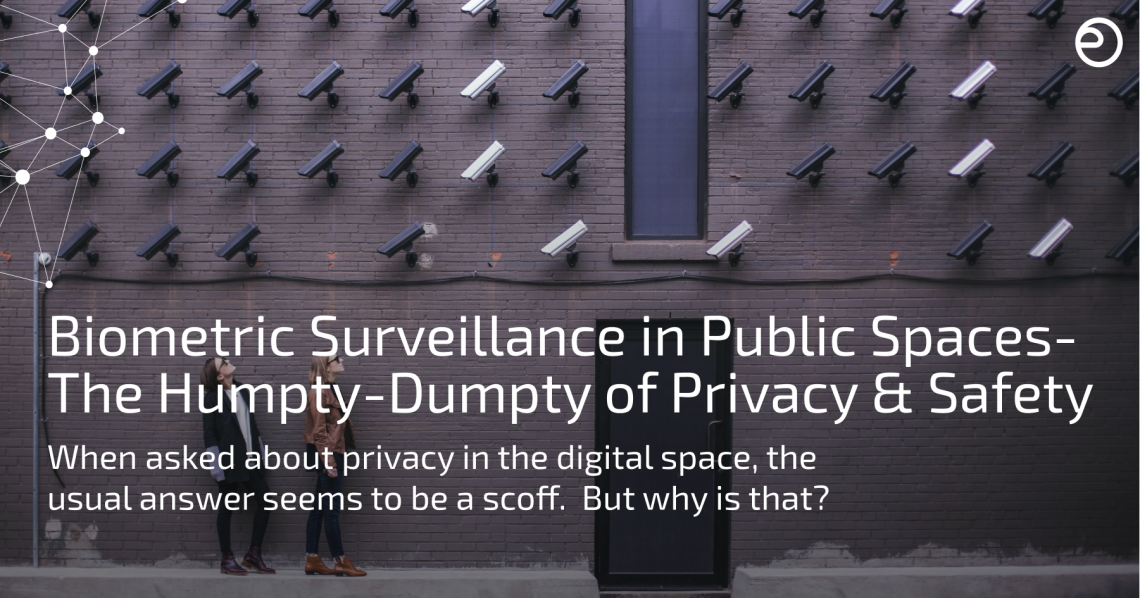
When asked about privacy in the digital space, the usual answer seems to be a scoff. Sometimes it is even followed by a taunting sneer with a tint of “there is nothing we can do about it though” look. But why is that?